Melasma is a common form of hyperpigmentation that appears as irregular, brownish patches—often on the cheeks, forehead, and upper lip—and can be stubborn to fade. Treatment begins with sun protection: broad-spectrum sunscreen, hats, and UV-blocking clothing are non-negotiable to prevent further darkening.
What is melasma?
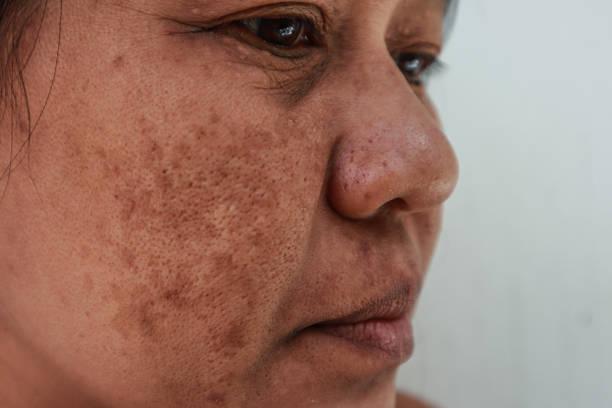
Melasma is an acquired hyperpigmentation disorder characterized by irregular, symmetrical brown to gray-brown patches that most commonly appear on sun-exposed areas of the face such as the cheeks, forehead, upper lip, nose, and chin. Often referred to as the “mask of pregnancy” when associated with hormonal changes, melasma predominantly affects women of reproductive age but can also occur in men. Although its precise pathophysiology is multifactorial, key contributors include ultravioletradiation, fluctuating estrogen and progesterone levels, genetic predisposition, and inflammation, all of which stimulate melanocyte activity and melanin overproduction. Clinically, melasma is classified into epidermal, dermal, or mixed types based on the depth of pigment deposition, which influences treatment response. Diagnosis typically relies on visual examination and use of a Wood’s lamp to differentiate pigment location. Although benign and asymptomatic, melasma often carries a significant psychological burden, as persistent discoloration can affect self-esteem. Management is challenging due to a high recurrence rate and requires an integrative, long-term strategy that emphasizes strict photoprotection, topical depigmenting agents, and procedural modalities. Understanding melasma’s complex interplay of environmental, hormonal, and genetic factors is essential for developing effective, personalized treatment plans. Melasma’s chronic nature underscores the importance of consistency, patience, professional guidance in achieving improvement.
What are the types of melasma?
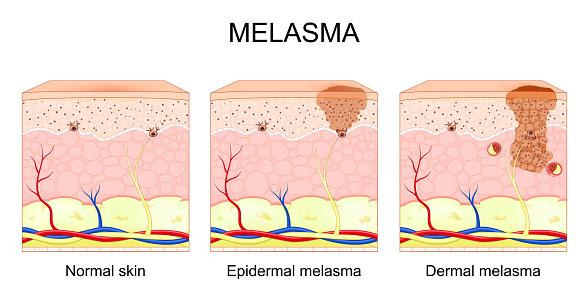
Melasma presents in distinct categories based on both anatomical distribution and histological depth of pigmentation. The most widely used classification divides melasma into epidermal, dermal, and mixed subtypes.
In epidermal melasma, increased melanin deposition is confined to the basal and suprabasal layers of the epidermis, resulting in well-demarcated light to dark brown patches that accentuate under a Wood’s lamp.
Dermal melasma features melanophages loaded with melanin in the superficial and mid-dermis, producing a slate-gray or bluish hue that does not intensify with Wood’s lamp examination.
Mixed melasma exhibits characteristics of both, with pigment present in the epidermis and dermis, often leading to discoloration.
An indeterminate type may also be recognized when penetration depth cannot be clearly defined. Additionally, melasma patterns by facial distribution—centrofacial (forehead, cheeks, upper lip, nose, and chin), malar (cheeks and nose), and mandibular (jawline and chin)—provide context for treatment planning.
Recognizing these types is crucial because epidermal lesions tend to respond more favorably to topical therapies, whereas dermal and mixed patterns often require combination approaches, including procedural modalities. Ultimately, accurate identification of melasma subtype guides the choice of interventions and informs prognostic expectations.
What causes melasma?
Melasma arises from a complex interplay of genetic, hormonal, and environmental triggers that converge to overstimulate melanocytes and drive excess pigment production.
Ultraviolet and visible light exposure remain the primary catalysts, as both UV and blue light penetrate the skin and trigger melanogenic pathways, making sun protection vital for prevention and management.
Hormonal fluctuations significantly influence melasma onset and severity: pregnancy often precipitates the “mask of pregnancy,” while exogenous estrogen–progesterone therapies (such as oral contraceptives or hormone replacement) similarly exacerbate pigmentation.
Genetic predisposition is also critical—up to 60 percent of individuals with melasma report affected family members—underscoring inherited susceptibility.
Additionally, thyroid disorders have been linked to melasma, reflecting the broader role of endocrine imbalances.
Certain medications and topical agents can provoke or worsen melasma through phototoxic or photosensitizing reactions; antiseizure drugs and fragranced cosmetics are notable examples.
Emerging research further implicates local factors—such as cutaneous inflammation, vascular changes, and neuropeptide activity—in melanocyte activation, contributing to deeper dermal pigment deposition in mixed-type melasma. Ultimately, these multifaceted causes culminate in the characteristic brown-to-gray macules on sun-exposed areas.
What foods affect melasma?
Melasma is influenced not only by hormonal and environmental factors but also by underlying medical conditions and dietary choices. Diet plays a subtle yet meaningful role: high–glycemic index foods—like white bread, sugary snacks, and other processed carbohydrates—cause rapid blood sugar spikes, elevating insulin and androgen levels that stimulate melanogenesis, while also promoting oxidative stress and inflammation that exacerbate hyperpigmentation. Dairy and soy products have been reported anecdotally to worsen some patients’ melasma, possibly due to their hormone-like compounds, though evidence remains limited. Conversely, antioxidant-rich foods—berries, leafy greens, nuts, and vitamin C–packed fruits—help neutralize free radicals and may support more even skin tone. Hydration and a balanced gut microbiome, maintained through probiotics, further contribute to skin health.
Melasma diagnosis tests
Melasma is primarily diagnosed through a detailed clinical evaluation, as no specific laboratory or imaging tests are routinely required. A thorough medical history and physical examination allow clinicians to identify characteristic brown-gray macules on sun-exposed facial areas and assess potential triggers such as hormonal therapy or pregnancy. To determine the depth of pigmentation, dermatologists often employ a Wood’s lamp examination: epidermal melasma appears more pronounced under ultraviolet light, while dermal pigment shows little enhancement, and mixed forms display intermediate features. Dermoscopy can further elucidate pigment distribution and rule out mimicking lesions like lentigines or post-inflammatory hyperpigmentation. In atypical or recalcitrant cases where the diagnosis is uncertain, a skin biopsy may be performed to confirm melanin localization and exclude other dermatoses. Although laboratory workup is generally unnecessary, evaluating thyroid function can be considered when endocrine disorders are suspected contributors. Photographic documentation at baseline supports treatment monitoring and guides therapeutic adjustments.
How are the brown spots of melasma treated?
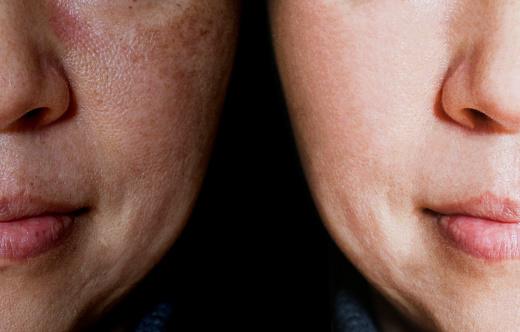
Effective treatment of melasma’s brown spots relies on a multi-pronged, long-term strategy centered on rigorous photoprotection and targeted therapies.
First and foremost, daily use of a broad-spectrum sunscreen (SPF 30 or higher)—ideally tinted with iron oxides to block both ultraviolet and visible light—is non-negotiable, as even indoor light exposure can worsen pigmentation.
Topical depigmenting agents form the cornerstone of treatment: hydroquinone remains the gold standard for inhibiting tyrosinase, often combined with tretinoin and a mild corticosteroid for enhanced efficacy, while alternatives such as azelaic acid, kojic acid, and vitamin C serums offer additional melanin-suppressing benefits.
Procedural interventions can accelerate clearance: superficial chemical peels (glycolic or salicylic acid) exfoliate pigmented keratinocytes, microneedling boosts topical absorption, and low-heat lasers or intense pulsed light selectively target dermal pigment without provoking rebound hyperpigmentation.
For refractory cases, intradermal injections of platelet-rich plasma or oral/topical tranexamic acid have shown promise in reducing melanogenesis and vascular factors that fuel melasma.
Because recurrence is common, consistent application of maintenance therapies—combined with avoidance of hormonal triggers and diligent sun avoidance—ensures the best chance of sustained lightening and prevention of new lesion formation.
How to avoid melasma from occurring?
Preventing melasma hinges on vigilant photoprotection, especially the daily application of a broad-spectrum sunscreen that shields against both UVA and UVB rays. Dermatologists recommend SPF 30 or higher (SPF 50 for enhanced defense), applied liberally to all exposed areas including the face, neck, ears, and hands. Choose formulas combining physical blockers—zinc oxide or titanium dioxide—with chemical filters for a lightweight feel. Tinted sunscreens with iron oxides add crucial protection against visible and blue light, which can also trigger pigmentation. Apply a generous layer—about two fingertip lengths—and don’t neglect often-missed spots like the hairline, jawline, and around the eyes. For continuous coverage, reapply every two hours and immediately after swimming, sweating, or towel-drying. Complement sunscreen with sun-smart habits: wear a wide-brimmed hat, UV-blocking sunglasses, UPF-rated clothing, and seek shade whenever possible. Indoor protection is vital—UV rays penetrate windows, so maintain sunscreen application when indoors or driving. Consistent year-round use prevents melanocyte activation and melanin overproduction, keeping skin tone even. Additionally, pairing sunscreen with a daily antioxidant serum neutralizes free radicals and boosts defense against pigmentation.

Conclusion
In summary, melasma’s stubborn brown patches arise from a complex mix of sun exposure, hormonal shifts, and genetic predisposition, yet they need not be permanent. A committed, multifaceted approach—anchored by rigorous daily photoprotection (broad-spectrum, tinted sunscreens and protective clothing), targeted topical agents, and periodic procedural therapies—can gradually fade discoloration and prevent new spots from forming. Success hinges on patience, consistency, and close collaboration with a dermatologist to tailor treatments to your skin’s response. While melasma may recur, understanding its triggers and adhering to a personalized management plan empowers you to keep those brown spots under control and enjoy a more even, radiant complexion over the long term.
Read More